Escape game · Carentan-les-Marais
Experience the D-Day from the inside
Le Blockhaus is the only escape game in France entirely dedicated to World War II. Bunker, U-Boot, resistance network — 4 immersive rooms steps away from the D-Day landing sites.
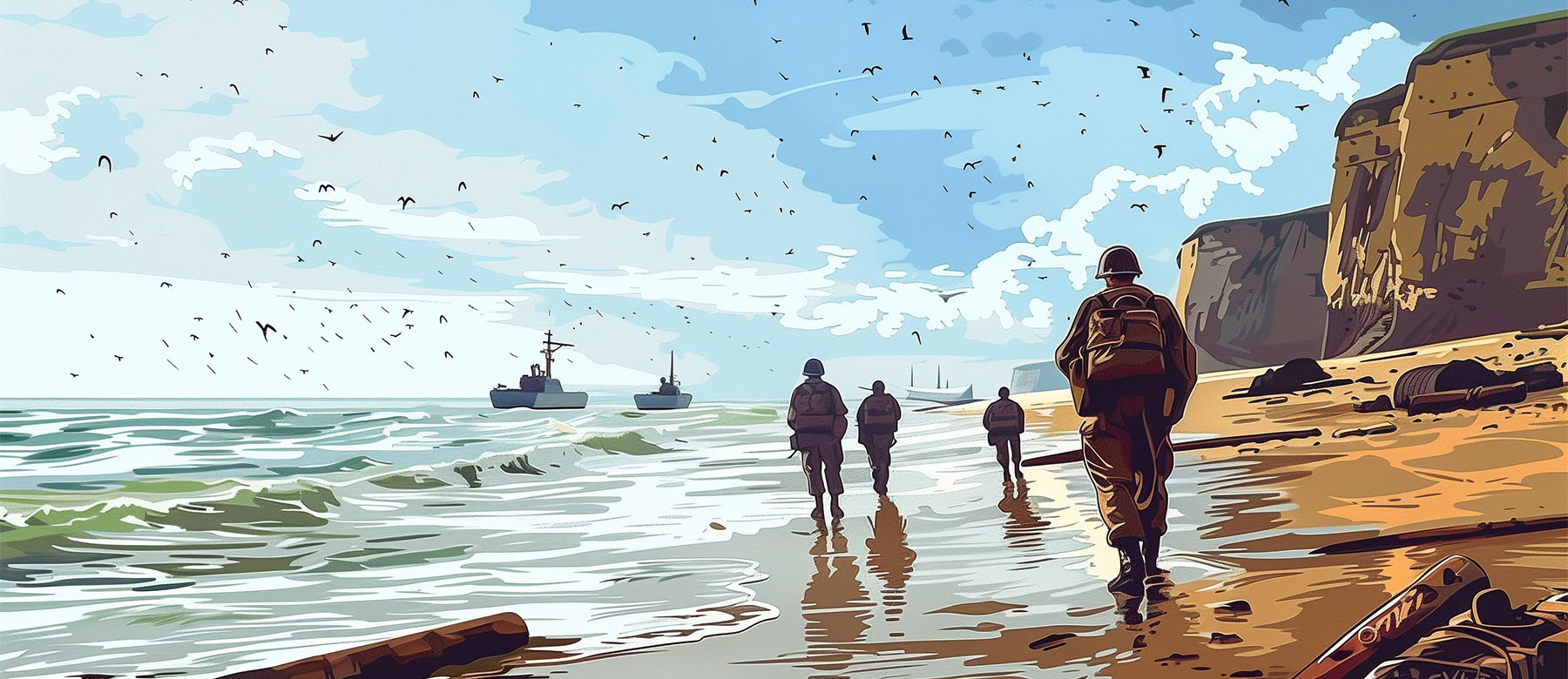
Book a sessionThe Battle of Carentan took place from June 10 to 13, 1944, four days after the Normandy landings. It primarily pitted the 506th Parachute Infantry Regiment (PIR) of the 101st Airborne Division against elements of the German 6. Fallschirmjäger-Regiment, commanded by Major Friedrich-August von der Heydte.
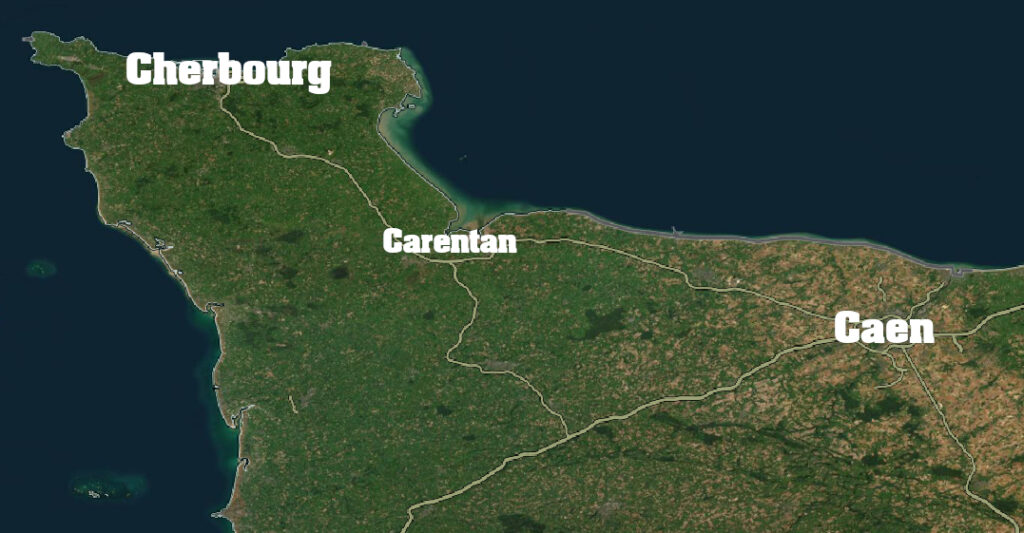
The objective was straightforward but vital: link Utah Beach and Omaha Beach by seizing the crossroads town of Carentan, a key hub in the heart of the Cotentin Peninsula.
Without that connection, the two Allied beachheads remained isolated, exposed to a German counterattack that could have jeopardized the entire Operation Overlord.
Why Carentan Mattered
Carentan sits at a strategic chokepoint in the Cotentin Peninsula.
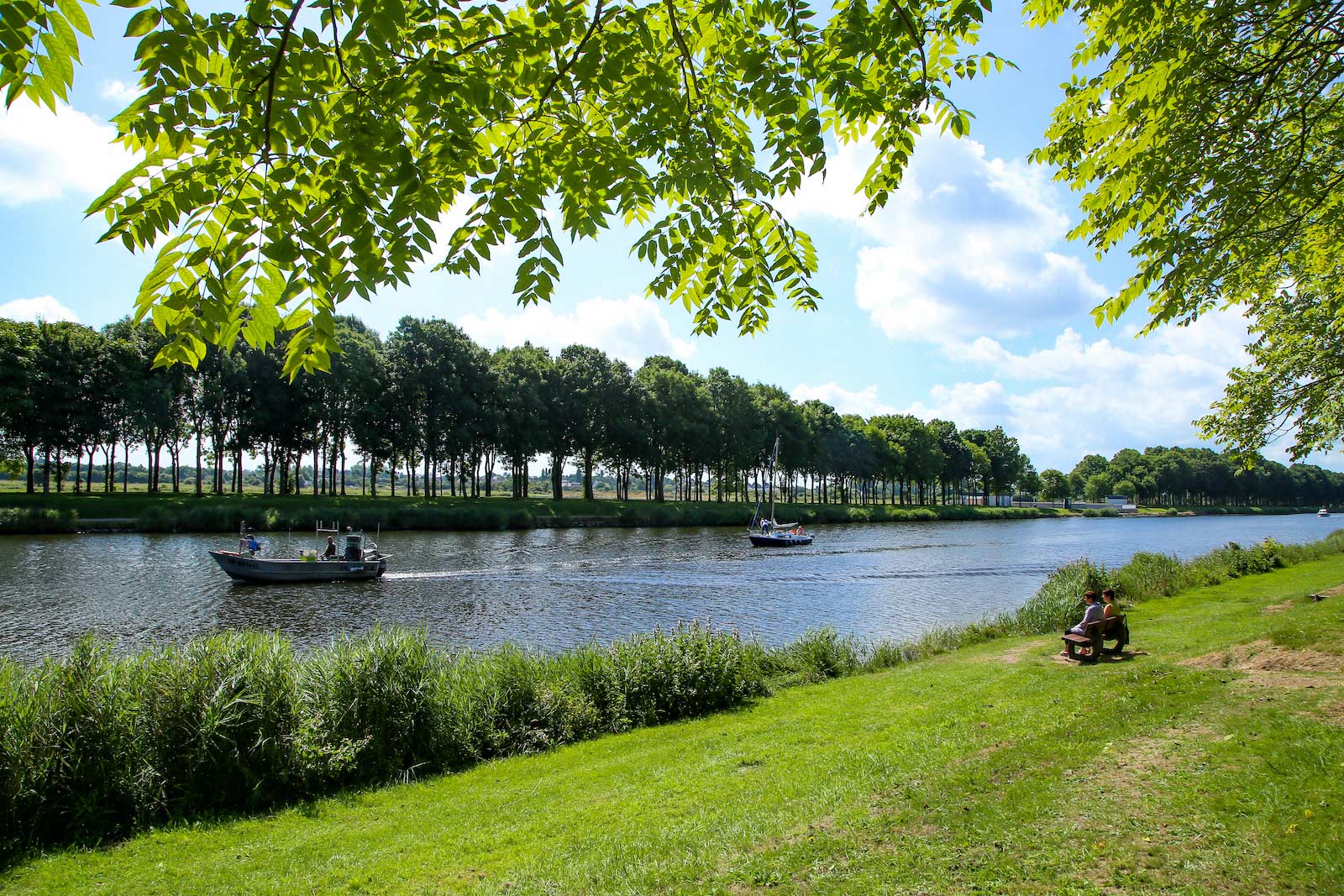
Surrounded by flooded marshland, partly inundated deliberately by the Germans to hamper the paratroopers, and crossed by the Douve river, the town controlled the only usable roads linking Utah and Omaha Beach.
Dwight D. Eisenhower and his planners knew that a gap between the two landing zones would hand the Germans an opportunity to launch a counteroffensive between them.
By June 7, General Maxwell Taylor, commanding the 101st Airborne, had orders to take Carentan at any cost.
The 506th PIR vs. the Fallschirmjäger
June 10–11 — The Approach Under Fire
Colonel Robert Sink committed all three of his battalions along the N-13 highway, the only solid approach route available, with the surrounding marshes ruling out any flanking maneuver.
The advance moved along a raised causeway stretching several kilometers, exposed on both sides.
Companies E (Easy) and D (Dog) of the 2nd Battalion took heavy casualties from mortar fire and MG 42s.
This is where Lieutenant Richard Winters had led the attack on the Brecourt Manor battery just days earlier.
He would become famous years later through the Band of Brothers series.
His Easy Company men found themselves back at the tip of the spear, exhausted and running low on ammunition.
June 12 — The Breakthrough
During the night of June 11–12, Lieutenant Colonel Patrick Cassidy pushed the 1st Battalion into a flanking attempt from the south.
Von der Heydte’s Fallschirmjäger, firmly dug into the stone houses of the town center, began giving ground under combined artillery and infantry pressure.
By the morning of June 12, the first American elements were inside Carentan.
Street fighting was brutal. Von der Heydte recognized he couldn’t hold without reinforcements and ordered a fighting withdrawal south toward Périers.
June 13 — The Armored Counterattack
On June 13, as American forces were consolidating their hold on the city, the Germans launched the “Stützpunkt Carentan” counterattack. SS armored units supported an infantry push that came alarmingly close to retaking the town.
The last-minute arrival of elements from the 2nd Armored Division from the north changed everything. M4 Sherman tanks stabilized the line and repelled the counteroffensive. Carentan was secured by the end of the day. The linkup between Utah and Omaha was complete.
Von der Heydte — The German Paratrooper Americans Respected
Von der Heydte is a singular figure in Normandy 1944.
A Bavarian aristocrat and lawyer by training, he ran his Fallschirmjäger with strict discipline, something his American opponents noted after the war.
He had ordered that Norman civilians be protected as much as possible during the urban fighting.
His Fallschirmjäger, hardened paratroopers armed with FG 42 automatic rifles and trained for close-quarters combat.
They held Carentan far longer than any standard infantry unit could have managed.
Von der Heydte survived the war and published his memoirs, in which he describes the fighting around Carentan with remarkable precision (a valuable primary source for historians).
What to See Around Carentan Today
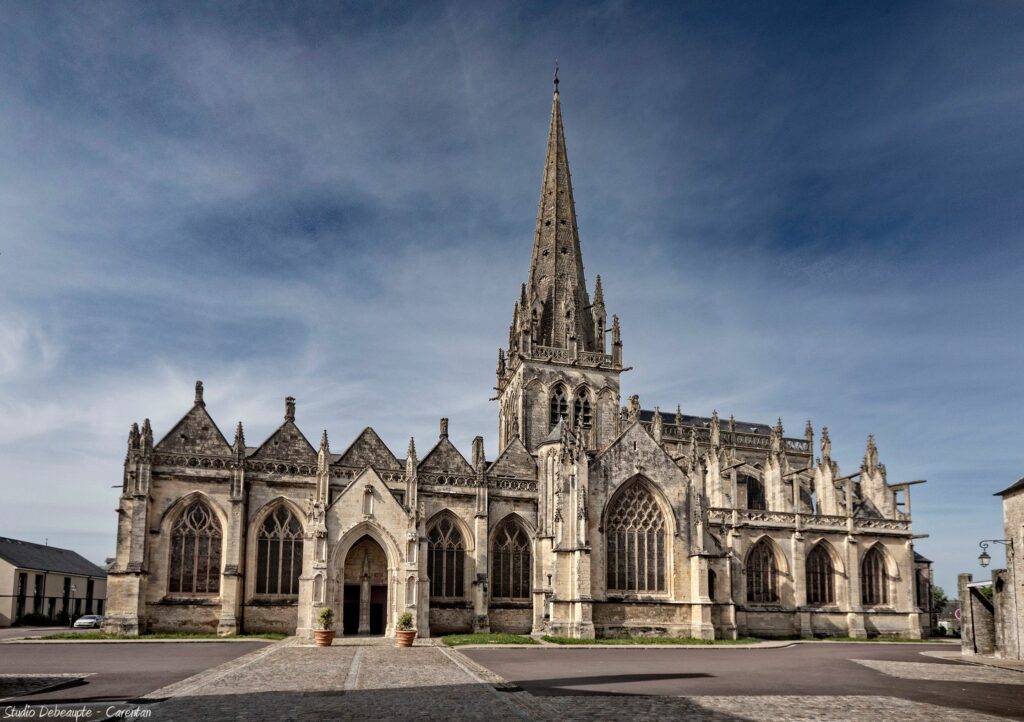
The town of Carentan-les-Marais merged with several neighboring communes in 2016.
Several sites in the area help bring the June 1944 fighting to life:
- The D-Day Experience (Dead Man’s Corner Museum), 4 km south : one of the most detailed reconstitution of 101st Airborne operations in the Cotentin, with original period equipment.
- Utah Beach Museum, 20 km northwest.
- Sainte-Mère-Église, 25 km away : a central site of the June 6 paratrooper fighting.
- The Douve marshes, still visible from local roads today.
- The Normandy Victory Museum in Cats, a few kilometers to the east. Relive the Battle of the Hedgerows through their scenography and their three bunkers.
Extend Your Visit — An Immersive D-Day Experience
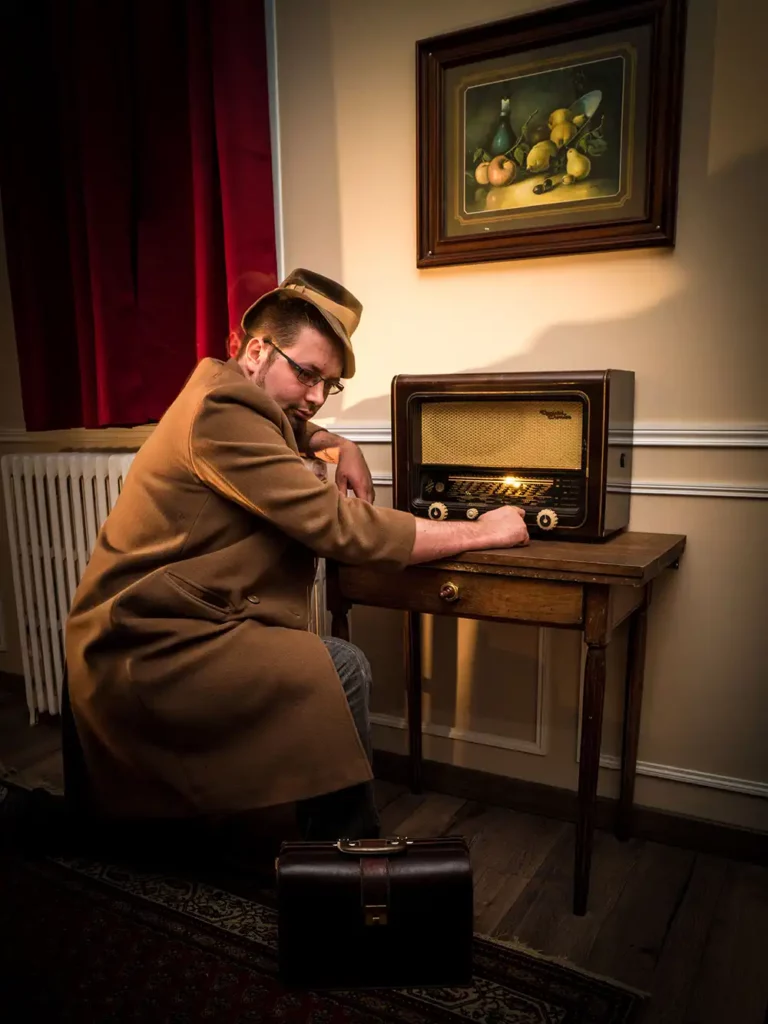
If you’re spending the day around Carentan, Le Blockhaus offers an original way to close out your historical tour. It’s the only escape game in France entirely dedicated to World War II and D-Day, located at 145 Rue de la 101ème Airborne. Four immersive rooms (a bunker, a U-Boot submarine, a French Resistance network, a secret factory) put groups of 2 to 6 players inside the stakes of June 1944, surrounded by period objects and carefully crafted scenography. Rated 5/5 across more than 650 reviews.
Book at leblockhaus-escape.fr/en/
FAQ
01
When did the Battle of Carentan take place?
From June 10 to 13, 1944 : four to seven days after the Allied landings on the beaches of Normandy on June 6, 1944.
02
Which units fought at Carentan?
American side: the 506th PIR of the 101st Airborne (Colonel Robert Sink), with support from the 2nd Armored Division on June 13. German side: the 6. Fallschirmjäger-Regiment under Major von der Heydte, reinforced by armor from the 17. SS-Panzergrenadier-Division.
03
Why was capturing Carentan so important?
Carentan linked Utah Beach and Omaha Beach. While the Germans held it, the two Allied beachheads remained cut off and vulnerable to a counterattack. Its capture on June 13 consolidated the Allied front and opened the road toward the rest of France.
04
Is Le Blockhaus connected to the Battle of Carentan?
Le Blockhaus is in Carentan-les-Marais, at the heart of the June 1944 battle zone. Its scenarios draw on World War II (bunker, U-Boot, resistance network, …) without reconstructing the battle itself. A concrete way to finish a day on the D-Day sites.
Conclusion
Carentan doesn’t have the name recognition of Omaha Beach or Sainte-Mère-Église, but without it, the two Allied beachheads stayed cut off.
In four days of fighting, the 506th PIR and their supporting units turned this marshy crossroads into the pivot point of the entire Normandy campaign.
If you’re planning a circuit through the D-Day sites, put Carentan on your itinerary. And if you’re looking to end your day with something more than another information panel, Le Blockhaus is waiting, just around the corner.
Une question ? Un projet d’équipe ?
CONTACTEZ
NOTRE ÉQUIPE
Notre équipe est là pour répondre à toutes vos questions sur nos missions, tarifs et disponibilités.